


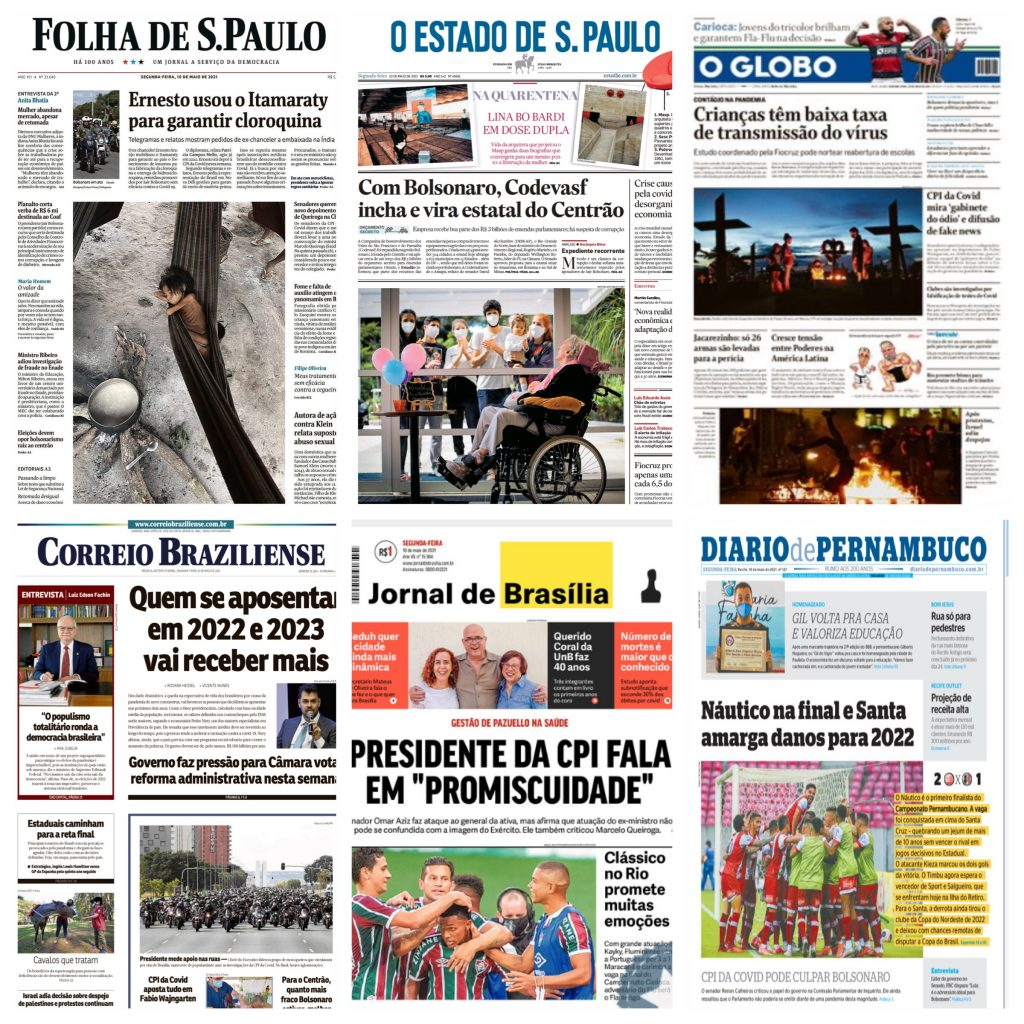
As everybody knows, we live in the digital era. Day-by-day we are overwhelmed with lots and lots of content coming from countless sources of information – from the newspaper to social media. Dharma believes that every piece of text released is a reverberation of the society in which the author is inserted - just as news influences us we can influence the content production machine, in a reflexive movement. That is why Dharma seeks to reveal which are the current narratives and possible emerging narratives in such a chaotic context of information diffusion.

We neither are looking for the so-called 'truth' nor do we intend to make a prediction of the future. Dharma does want to find common knowledge, or what agents believe other agents consider to be the so-called 'truth'.
Dharma exists to answer two questions:
When do narratives change and what is already 'priced in'?
Who said what and why?
Given all possible NARRATIVES out there, which one should WE MONITOR? Which will prevail? How those narratives end up influencing our own opinions and preventing us to know WHAT REALLY MATTERS to make a DECISION!
Using state-of-the-art algorithms, we propose a topological search through relationships between actors, facts and available information. Supported by a strong theoretical basis involving graph theory, complex systems analysis, network analysis, information theory, game theory and discourse analysis, Dharma offers differentiated insights based on news.
Meet the 'next level' of news consuming and search for narratives and trends, giving you an in-depth analysis not offered in the market for you to be as news opinion-agnostic as possible. Dharma is not looking for the short term trend or to bullseye the exact time a narrative is created, but rather find emerging and persisting narratives.
That's exactly why it was created!
*According to Wikipedia, "There is no single word translation for "dharma" in Western languages. The meaning of the word "dharma" depends on context, and its meaning has evolved as the ideas of Hinduism have developed over its long history, in older texts, dharma meant cosmic law. In later Vedas, the meaning became refined, richer, complex, and the word "dharma" was applied in different contexts." We like the interpretation of the word that "dharma designates human behaviors considered necessary in the universe, principles that prevent chaos" and our search is through the chaotic relations between agents and narratives that move the world. Also, this other passage "with respect to its spiritual meaning, it can be considered as the "Way to Higher Truth". In a way, excusing the mixing of different meanings and with all due respect to its sacred meaning, we are somehow also searching for some truth, even though we don't, by all means, have the pretension to call it higher truth.
We want to do...